
What are three basic rules of online etiquette (netiquette)?
On the tee, though, you always want stand to the side or behind (though not directly behind, which many people find distracting) your partner shazam casino sign up. Don’t move, talk, whistle or jangle change while they’re hitting. And try not to sneeze. Similar rules apply on and around the green. While it’s fair game to stand still in someone’s peripheral vision, directly behind them is a no-go, as is standing in their sightline when they’re putting, chipping or blasting from a bunker. In that last case, you not only risk being a distraction. You’re also put yourself at physical risk.
Again, this doesn’t seem like something worth changing the rules over. I’m only talking about PGA players here when I say just wear the pants. You’re professionals. It’s not that hot no matter where they go. This is one of the cool traditions because I remember as a kid wearing pants to junior tournaments to act more professional and try to intimidate the other kids.
Pretend that you’re camping in a National Park. When you depart, no one should know that you were there. That’s another way of saying: rake bunkers, fill divots and repair ball marks. No doing donuts in the fairway, either.
Showing up early is essential for golfing with friends, co-workers, or clients. It gives everyone time to settle and be in the right frame of mind for an enjoyable round of golf. Additionally, it’s important to remember that you won’t have much time once you start playing – giving yourself a few minutes of practice before the game is important.
It’s understandable why the USGA made this change. Public courses are often crowded, and players can get backed up if they take too long to look for their ball. Slow play can ruin a round of golf, so it’s important to stick within the allotted time frame. Players should also watch where their ball is going when hitting to find it quickly.
The unwritten rules of professional etiquette
Psychologist and associate professor Ryan Sharma has been mentoring students through higher education for over 14 years, teaching classes in professionalism, consultation, and clinical supervision. In his role as the director of clinical training at California Lutheran University, he helps students develop their professional identity so that they can be successful working alongside seasoned clinicians. When he is not teaching or treating anxiety in his private practice, he is either woodworking or spending time with his wife and three children.
The distinction between competence and professionalism is the reason you cannot assume that, just because you show up to classes in graduate school and get good grades, you will have everything you need to carry you through your career. This misunderstanding is likely fueled by the perception that grades are everything, which is what you may have learned as an undergrad. Unfortunately, grades only measure your competence in the subject matter and not your professionalism. After all, acting professionally is not required when learning statistics, for example—you could learn those math skills quite efficiently while also being rude.

Psychologist and associate professor Ryan Sharma has been mentoring students through higher education for over 14 years, teaching classes in professionalism, consultation, and clinical supervision. In his role as the director of clinical training at California Lutheran University, he helps students develop their professional identity so that they can be successful working alongside seasoned clinicians. When he is not teaching or treating anxiety in his private practice, he is either woodworking or spending time with his wife and three children.
The distinction between competence and professionalism is the reason you cannot assume that, just because you show up to classes in graduate school and get good grades, you will have everything you need to carry you through your career. This misunderstanding is likely fueled by the perception that grades are everything, which is what you may have learned as an undergrad. Unfortunately, grades only measure your competence in the subject matter and not your professionalism. After all, acting professionally is not required when learning statistics, for example—you could learn those math skills quite efficiently while also being rude.
I care greatly about my students and their ultimate success, which is why I hold such a high bar for them while they are under my training. I have noticed that I intermittently tuck advice inside the manuals I write, the emails I send, and the lectures I give. I have decided to share that advice in this book so that you, too, can maximize your success. If I can lift you up with some of the suggestions in this book, then it elevates us all.
A truly professional demeanor will give you access to a competitive edge, yet there are many unwritten expectations that-if you are not aware of them-can jeopardize your reputation. The Unwritten Rules of Professional Etiquette gives you an honest account of the ways faculty silently judge students without pulling any punches. With this straightforward advice you can sidestep the hidden graduate school pitfalls and emerge at the top of your class. Covering topics such as excelling in interviews, responding to constructive feedback, and dealing with difficult faculty, this compendium is an essential resource for navigating the complex world of academic relationships. While this is an indispensable handbook for graduate students, undergrads practicing this advice will be truly outstanding.
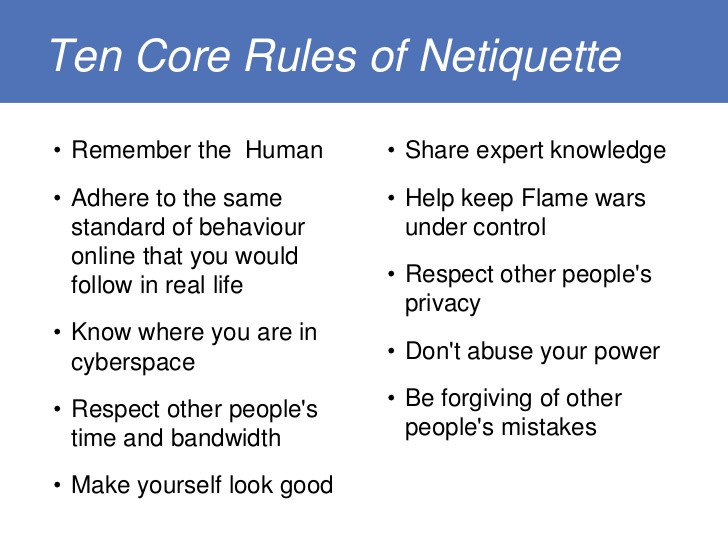
10 rules of online etiquette
In the near future, “I think it will be a complete privilege” for a person to not have images of their lives online, she says. Via user agreements and data brokers, “some third parties can use your voice, your face and your image to create something completely against your will.” So now might be the time to take a hard look at what you’re putting out there.
In this digital age, the Internet is a pretty unavoidable part of everyday life. And, because we interact with others online so much, it’s especially important to be aware of digital etiquette, also called “netiquette.” If you want to learn more about what digital etiquette is and how to follow it, you’ve come to the right place! We’ll go over the basic rules of digital etiquette, and we’ll also explain how to teach it to your children if you’re a parent. Keep reading for everything you need to know!
At Rasmussen University, you’ll also have lots of support outside of the classroom too including 24/7 technology support, student advisors, and library services to help you find answers about your classwork, technology access, or curriculum plan.
In the near future, “I think it will be a complete privilege” for a person to not have images of their lives online, she says. Via user agreements and data brokers, “some third parties can use your voice, your face and your image to create something completely against your will.” So now might be the time to take a hard look at what you’re putting out there.
In this digital age, the Internet is a pretty unavoidable part of everyday life. And, because we interact with others online so much, it’s especially important to be aware of digital etiquette, also called “netiquette.” If you want to learn more about what digital etiquette is and how to follow it, you’ve come to the right place! We’ll go over the basic rules of digital etiquette, and we’ll also explain how to teach it to your children if you’re a parent. Keep reading for everything you need to know!
At Rasmussen University, you’ll also have lots of support outside of the classroom too including 24/7 technology support, student advisors, and library services to help you find answers about your classwork, technology access, or curriculum plan.
